
This is the print version of this page. All content is copyright Indezine.com 2000-
2026.
A lecture, by keeping a critical audience constantly before our eyes, forces us to condense our subject, to discriminate between what is important and what is not, and often to deny ourselves the pleasure of displaying what may have cost us the greatest labor, but is of little consequence to other scholars. In lecturing we are constantly reminded of what students are so apt to forget, that their knowledge is meant not for themselves only, but for others, and that to know well means to be able to teach well.
Filed Under:
M
Tagged as: Max Müller
Comments Off on A lecture, by keeping a critical audience: by F Max Müller
Every new technology (AI) disrupts. The Internet disrupted publishing, music, retail, but it also creates opportunities. It’s (AI is) a power tool. It should be used wisely. I keep hearing they will take over the world. I understand programming. I don’t believe that will happen.
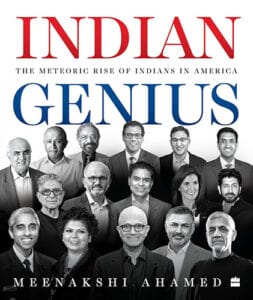
This quote is from an interview with Kanwal Rekhi in Indian Genius: The Meteoric Rise of Indians in America. This book, by Meenakshi Ahamed explores the extraordinary success of Indian Americans in fields like technology, medicine, and public policy. Featuring profiles of figures like Satya Nadella and Vinod Khosla, it highlights their rapid ascent in American society within a single generation.
Kanwal Rekhi, a pioneering Indian American entrepreneur and venture capitalist, features in the book for his pivotal role in shaping Silicon Valley and mentoring entrepreneurs, aligning with its themes of achievement and influence.
Filed Under:
M
Tagged as: Kanwal Rekhi, Meenakshi Ahamed
Comments Off on Every new technology disrupts: by Kanwal Rekhi
I knew from 25 years of shooting still photographs for magazines all over the world that attitude and body language are paramount in creating a strong visual impression—magazine ads have less than two seconds to capture the reader’s attention.

This quote is so relevant even in the world of presenting to audiences. First, the presenter’s attitude and body language are paramount to the success of the presentation. Secondly, similar to magazine ads, your slides have less than a few seconds to capture the audience’s attention, and rightly so, because after those initial seconds, the attention should be on the presenter, and not the slides!
Other than Nicholas’ book, you may want to read this post by Jerry Weissman, where he shares Vinod Khosla’s five-second rule for slides.
Filed Under:
N
Tagged as: Nicholas Boothman
Comments Off on Magazine ads have less than two seconds: by Nicholas Boothman
Whether it was working with a single model for a page in Vogue or 400 people aboard a ship to promote a Norwegian cruise line. It was obvious that for me photography was more about clicking with people than about clicking with a camera.
This is another awesome book that makes you realize that you are one part of an entire world ecosystem.
Filed Under:
N
Tagged as: Nicholas Boothman
Comments Off on Whether it was working with: by Nicholas Boothman
People skilled in data visualization are hard to come by. Part of the challenge is that data visualization is a single step in the analytical process. Those hired into analytical roles typically have quantitative backgrounds that suit them well for the other steps (finding the data, pulling it together, analyzing it, building models), but not necessarily any formal training in design to help them when it comes to the communication of the analysis–which, by the way, is typically the only part of the analytical process that your audience ever sees. And increasingly, in our ever more data-driven world, those without technical backgrounds are being asked to put on analytical hats and communicate using data.
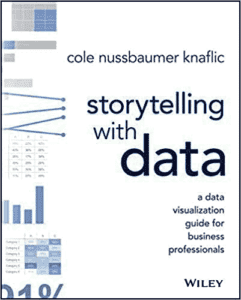
This is one of those books that helped change the thinking about not using complicated, text-heavy charts.
Filed Under:
C
Tagged as: Charts, Cole Nussbaumer Knaffic, Design, PowerPoint, Presentation Design, Visuals
Comments Off on People skilled in data visualization are hard to come by: by Cole Nussbaumer Knaffic
Microsoft and the Office logo are trademarks or registered trademarks of Microsoft Corporation in the United States and/or other countries.